
By Runey & Associates Wealth Management in Mount Pleasant, SC
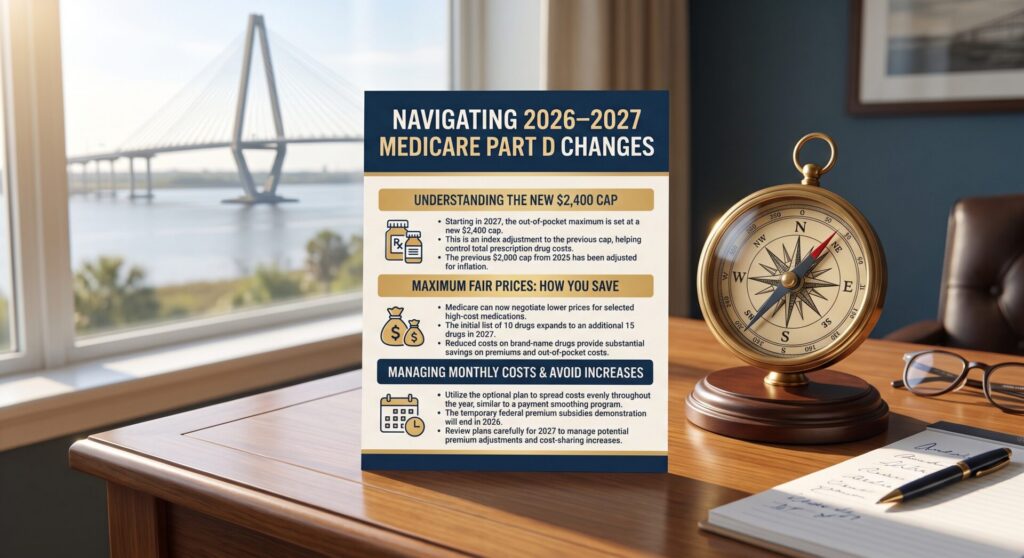
As Medicare’s Annual Enrollment Period approaches, beneficiaries across Mount Pleasant and the greater Charleston area are facing substantial updates to Medicare Part D prescription drug coverage.
Driven by ongoing provisions of the Inflation Reduction Act, these regulatory shifts reshape prescription costs, plan structures, and monthly budgeting. While reforms offer relief for individuals managing chronic conditions or taking high-cost medications, structural changes—including the expiration of federal premium subsidies after 2026—require careful planning to mitigate premium spikes.
Here is a clear breakdown of the 2026 and 2027 Medicare Part D rule changes, how they affect your retirement cash flow, and actionable steps to optimize your coverage.
Key Medicare Part D Changes: 2026 vs. 2027
1. Out-of-Pocket Cap Inflation Adjustments
- 2026: Out-of-pocket maximums for covered Part D prescription drugs are capped at $2,100.
- 2027 Look-Ahead: Indexing raises the out-of-pocket maximum cap to $2,400. Once you hit this threshold, covered medications drop to $0 for the rest of the calendar year.
- The “Donut Hole”: The Coverage Gap remains permanently eliminated as of 2025. This means you no longer face a sudden jump in out-of-pocket costs in the middle of the year after spending a certain amount on medications before catastrophic coverage kicks in.
2. Expansion of Medicare Direct Price Negotiations
- 2026: Negotiated “Maximum Fair Prices” take effect for the first 10 selected high-cost Part D medications (including widely prescribed treatments for diabetes, heart failure, and blood clots).
- 2027 Look-Ahead: An additional 15 high-cost drugs will have lower negotiated prices under the Medicare Drug Price Negotiation Program, extending negotiated savings across more widely used brand-name medications.
3. Expiration of Premium Stabilization Subsidies (2027 Impact)
- The Shift: The federal Part D Premium Stabilization Demonstration program—which provided insurers with temporary subsidies to curb premium increases—expires at the end of 2026.
- The Impact: Starting January 1, 2027, stand-alone Part D plan premiums will be set without federal buffer subsidies according to CMS Contract Year 2027 Guidelines. While statutory rules cap annual base growth to prevent drastic spikes (CMS projects average monthly increases of $10 or less for most enrollees), individual plan premiums may experience notable adjustments.
4. Prescription Payment Plan (Cost Smoothing)
- The Rule: The Medicare Prescription Payment Plan allows enrollees to spread out-of-pocket drug costs into capped, interest-free monthly installments across the calendar year rather than paying large sums upfront.
Medicare Part D Multi-Year Comparison: 2025 – 2027
| Feature / Benefit | 2025 Standard Rules | 2026 Updated Rules | 2027 Projected / Finalized Rules |
| Annual Out-of-Pocket Cap | $2,000 | $2,100 | $2,400 |
| Coverage Gap (“Donut Hole”) | Permanently Eliminated | Permanently Eliminated | Permanently Eliminated |
| Maximum Standard Deductible | $590 | $615 | $700 |
| Medicare Negotiated Prices | Finalized | Active for 10 Part D drugs | Expanded to 25 total Part D drugs |
| Covered Insulin Copay | $35 / month cap | $35 / month cap | $35 / month cap |
| ACIP Recommended Vaccines | $0 cost-sharing | $0 cost-sharing | $0 cost-sharing |
| Premium Support Status | Subsidized | Subsidized (Demonstration) | Demonstration Expires (Individual Pricing) |
Actionable Strategies to Mitigate Cost Increases
1. Treat Your Annual Notice of Change (ANOC) as Essential Reading
With the expiration of premium stabilization in 2027, insurers will actively adjust drug formularies, pricing tiers, and monthly premiums. Reviewing your plan annually ensures your specific brand-name medications remain covered cost-effectively.
2. Leverage Payment Smoothing for High-Cost Months
If your medications cause heavy cash outlay early in the year, opt into the Medicare Prescription Payment Plan. Spreading expenses evenly over 12 months avoids unnecessary liquidity disruptions to your taxable brokerage or high-yield savings accounts.
3. Align Health Spending with Your Overall Wealth Strategy
Healthcare expenses are a core variable in sustainable retirement distribution planning. Anticipating potential premium changes and out-of-pocket cap adjustments ($2,100 in 2026 moving to $2,400 in 2027) helps keep your withdrawal rates and cash-reserve buffers on track.
Partnering with Local Expertise
Navigating healthcare coverage requires balancing immediate medical needs with long-term financial independence. As a Mount Pleasant wealth management firm, we work closely with Lowcountry families to ensure their retirement portfolios, tax strategies, and healthcare planning remain fully aligned. Do you have questions about how your healthcare costs impact your overall retirement plan? Contact our office today to schedule a portfolio and retirement income review.